
Dylan Pham, PhD
Biography
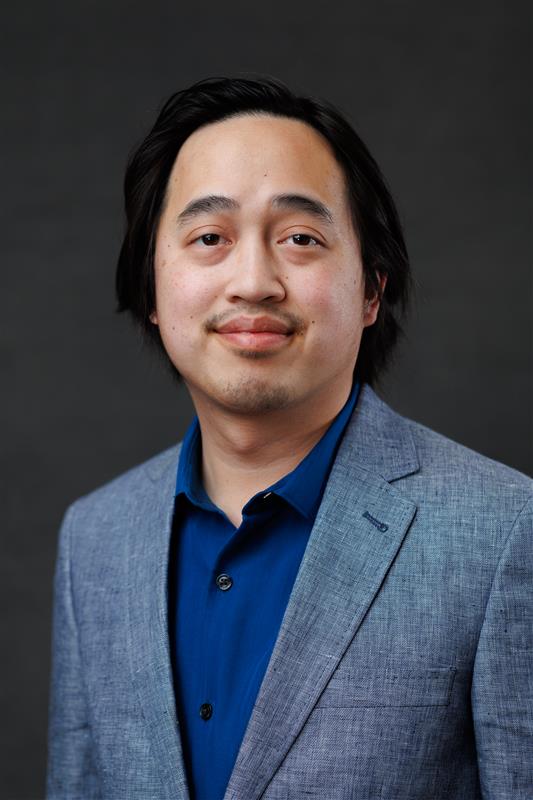
Dr. Dylan Pham is a postdoctoral research fellow in the lab of Dr. Travis Hein in the Department of Medical Physiology at the Texas A&M University Naresh K. Vashisht College of Medicine. Dr. Pham’s main research focus is on delineating the molecular and physiological mechanisms of the neural retina and retina microvasculature in diabetic retinopathy, a blinding disease caused by diabetes. In particular, Dr. Pham is interested in the interplay of neural and vascular systems in disease and development using various models from cell culture to mouse models to swine models. Other research focuses include the effects of various conditions on vision such as natural aging and spaceflight. Dr. Pham earned his Bachelor’s in biochemistry from Louisiana State University and his Masters in Pharmacology at Tulane University. Dr. Pham earned his PhD in Biomedical Sciences in the lab of Dr. Gladys Ko at Texas A&M University College of Veterinary Medicine and Biosciences, where he studied the molecular mechanisms of a novel pro-angiogenic molecule known as Peptide Lv.Education and Training
- Texas A&M University, PhD, Biomedical Sciences, 2023
- Tulane University, MS, Pharmacology, 2018
- Louisiana State University, BS, Biochemistry, 2016
Research Interests
- Retinal neural biology
- Retinal vascular biology
- Diabetes
- Aging
- Spaceflight
Teaching Interests
- Teaching Assistant: Endocrine Toxicology (VIBS422/622) College Station, TX.
- Teaching Assistant: Intro to Neuroscience (VIBS277) College Station, TX.
- Teaching Assistant: Neuroscience Overview (NRSC407/VIBS407) College Station, TX.
- Teaching Assistant: Neuroanatomy (VIBS450/650) College Station, TX.
- Teaching Assistant: Histology (VIBS243) College Station, TX
Awards, Recognition and Service
- Texas A&M University Diversity Fellowship
- Texas A&M University CVMBS-Graduate Student Research Trainee Grant
- Texas A&M University CVMBS Graduate Student Association Travel Award
- Graduate Mentoring Academy Fellow, Texas A&M University
- Texas A&M University VMBS Graduate Student Association Travel Award
- Texas A&M University Office of Graduate and Professional School Travel Award
- Texas A&M University VMBS-Graduate Student Research Trainee Grant
- Texas A&M University VMBS Symposium People’s Choice Poster Award
- 1st Place Oral Presentation Texas A&M University Cardiovascular Research Institute Symposium
- 2nd Place Texas A&M University College of Medicine Flash Talk Competition
- Texas A&M Health Postdoctoral Travel Award
- IRACDA Postdoctoral Scholar
- Treasurer, Texas A&M University VMBS Graduate Student Association
- VIBS Department Rep, Texas A&M University VMBS Graduate Student Association
- Texas A&M University CVMBS Graduate Student Advisory Committee
- Recording Secretary, Texas A&M University Postdoctoral Association
- Planning Committee, Texas A&M University 8th Annual Postdoctoral Symposium
- Postdoctoral Representative: Texas A&M University College of Medicine Academic Leadership Training for Advancing Researchers Program
- 2024 Proposal Reviewer: Texas A&M University Undergraduate Research Scholars Thesis Program
- Planning Committee, Texas A&M University 9th Annual Postdoctoral Symposium
- Advocacy Committee, National Postdoctoral Association
- Chair, Networking and Social Sub-Committee, National Postdoctoral Association Meetings Committee
- Treasurer, Texas A&M University Postdoctoral Association
Representative Publications
- Boese AC, Le QE, Pham D, Hamblin MH, Lee JP. 2018. Neural stem cell therapy for subacute and chronic ischemic stroke. Stem Cell Research & Therapy. 9:154. Doi: 10.1186/s13287-D18-D913-2
- Shi LS, Zhao M, Abbey CA, Tsai SH, Xie W, Pham D, Yu F, Bayless KJ, Hein TW, Rosa RH, Ko ML, Kuo L, Ko GY. 2019. A newly identified peptide, peptide Lv, promotes pathological angiogenesis. Journal of American Heart Association. https://doi.org/10.1161/JAHA.119.013673
- Yu F, Chapman S, Pham DL, Ko ML, Zhou B, Ko GYP. 2020. Decreased miR-150 in obesity-associated type 2 diabetic mice increases intraocular inflammation and exacerbates retinal dysfunction. BMJ Open Diabetes Research & Care. DOI: 10.1136/bmjdrc-2020-001446
- Pham DL, Niemi A, Ko M, Ko GYP. 2022. Peptide Lv augments intermediate-conductance calcium-dependent potassium channels (KCa3.1) in endothelial cells to promote angiogenesis. PLOS-ONE. https://doi.org/10.1016/j.bbamcr.2015.02.007
- Pham, D.L.; Niemi, A.; Blank, R.; Lomenzo, G.; Tham, J.; Ko, M.L.; Ko, G.Y.-P. Peptide Lv Promotes Trafficking and Membrane Insertion of KCa3.1 through the MEK1–ERK and PI3K–Akt Signaling Pathways. Cells 2023, 12, 1651. https://doi.org/10.3390/cells12121651
- Pham, DL; Cox, K; Ko M, Ko GYP. 2024. Peptide Lv and Angiogenesis: A Newly Discovered Angiogenic Peptide. Biomedicines. https://doi.org/10.3390/biomedicines12122851
- Owusu-Ansah K; Thomas KN; Cox K; Pham DL; Chen WL; Ko ML; Golding MC; Ko GYP. Preconception Paternal Alcohol Consumption Elicits Postnatal Changes in Neural Retinas of the Offspring. Iovs 2025. 66.2. doi:https://doi.org/10.1167/iovs.66.2.16
- Owusu-Ansah K; Pham DL; Strong BC; Liberoni L; Hein TW; Kuo L; Ko ML; Ko GYP. Peptide Lv Deficiency Adversely Impacts the Structural and Functional Integrity of the Neural Retina. Iovs 2025. 66.5. doi:https://doi.org/10.1167/iovs.66.5.37